Imagine struggling to reach a shelf, button your shirt, or lift a cup of tea. Everyday movements that were once effortless suddenly cause sharp pain or stiffness in your shoulder. Over time, even brushing your hair or turning to drive becomes uncomfortable, and at night, the shoulder aches, disturbing your sleep.
This is the reality for many people with frozen shoulders, medically called adhesive capsulitis. It develops slowly, often starting as a dull ache and progressing to stiffness that can limit movement for months or even years. Many try rest, medications, or physiotherapy, but the pain often persists, making daily life frustrating.
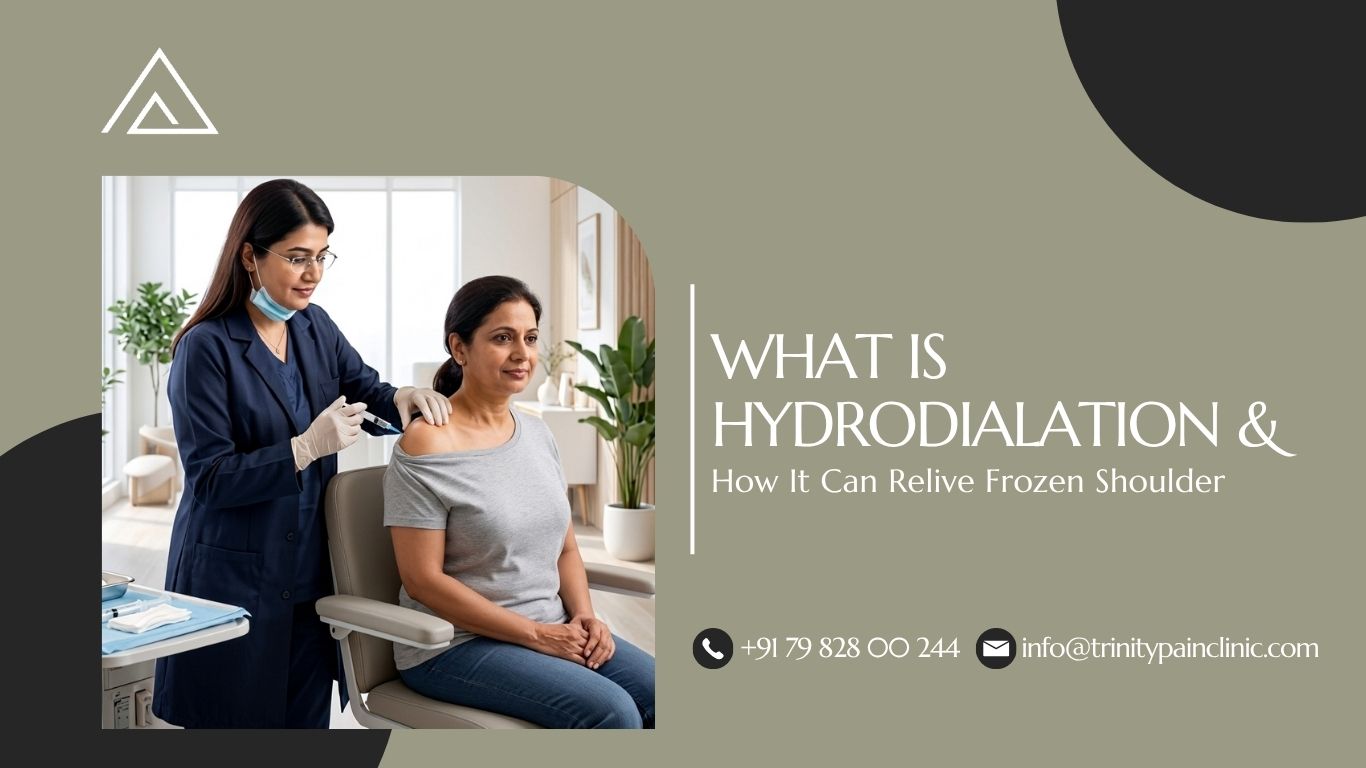
At Trinity Pain Clinic we offer the most effective treatment- hydrodilation for frozen shoulder in Rohini, a minimally invasive procedure that gently stretches the tight capsule of the shoulder joint. Patients often notice improved mobility immediately after a single session, without the need for surgery or hospitalization. Let us know more about it!
Frozen Shoulders
Frozen shoulder happens when the capsule around your shoulder joint becomes thickened and tight. This capsule is a soft tissue envelope that helps keep the shoulder stable. When it gets inflamed or develops adhesions (like small internal scars), the shoulder loses flexibility and becomes painful to move.
Most people experience frozen shoulders between the ages of 40 and 60. Women are slightly more likely to develop it, though it can affect anyone. The condition sometimes starts after an injury, surgery, or even prolonged immobility. People with medical conditions such as diabetes and hypothyroidism are also more prone to developing this condition. For example, if you’ve been recovering from a fracture or have been avoiding shoulder movement for weeks, it may trigger frozen shoulder.
Without treatment, frozen shoulder often goes through three stages:
Freezing stage: Pain gradually increases, and movement starts to become limited. This stage can last 6–9 months.
Frozen stage: Pain may decrease slightly, but stiffness remains. You may struggle to lift your arm or rotate it. This stage can last 4–12 months.
Thawing stage: Movement slowly improves over time, but it can take several months to regain full mobility.
As you can see, the natural recovery process is slow, and for many people, it’s uncomfortable and disruptive to daily life.
Symptoms of Frozen Shoulder
The most common symptoms include:
Pain in the shoulder, often worse at night
Stiffness that limits overhead movement
Difficulty reaching behind your back
Pain when lifting, pushing, or pulling objects
Gradual loss of range of motion over time
Some people also experience referred pain in the upper arm or shoulder blade. While home remedies and physiotherapy may help mild stiffness, many patients need targeted treatment for lasting relief.
What is Hydrodilatation?
Hydrodilatation is a minimally invasive procedure designed specifically to stretch and loosen the tight capsule around the shoulder joint. It is often recommended for patients whose frozen shoulder has not improved with physiotherapy or medications.
During the procedure, a special fluid is injected directly into the shoulder joint under imaging guidance. This fluid usually contains:
Saline (to gently expand the joint capsule)
Local anesthetic (to reduce pain during the procedure)
Anti-inflammatory medication (to reduce swelling and irritation)
The fluid stretches the tight capsule from within, breaking adhesions and improving mobility.
Most patients notice immediate improvement in movement after a single session. The procedure is done in one sitting, requires no surgery, and does not need hospitalization.
How Hydrodilatation Helps?
Hydrodilatation offers several benefits for people suffering from frozen shoulder:
Reduces Pain: By stretching the joint capsule and releasing adhesions, the procedure relieves pain caused by inflammation and stiffness.
Improves Movement: Most patients regain range of motion quickly, allowing them to resume daily activities more comfortably.
Non-Surgical Option: Unlike shoulder replacement or more invasive surgeries, hydrodilatation is minimally invasive and safe.
Quick Recovery: Gentle physiotherapy can begin immediately after the procedure, which helps maintain mobility and prevent recurrence.
Dr. Smita Gulati meticulously assesses each patient to confirm that hydrodilatation for frozen shoulder in Rohini is the most appropriate and personalized treatment for their specific condition.
Who Can Benefit from Hydrodilatation?
Hydrodilatation is particularly useful for patients who:
Have confirmed frozen shoulder
Have persistent pain and limited motion despite physiotherapy or medications
Want to avoid surgery
Are older adults with advanced stiffness or early osteoarthritis in the shoulder
Wish to regain functional movement quickly
This treatment can significantly improve quality of life, allowing patients to return to normal daily activities without pain holding them back.
The Procedure: What to Expect
Assessment: Dr. Gulati evaluates your shoulder and reviews imaging, if needed, to pinpoint the affected areas.
Injection: A carefully prepared fluid is injected into the tight shoulder capsule using imaging guidance to ensure accuracy.
Stretching the Capsule: The fluid gently stretches the joint from within, releasing adhesions.
Immediate Mobility Check: Most patients can move their shoulder immediately after the procedure.
Follow-up Therapy: Physiotherapy exercises are recommended to maintain improved range of motion.
The entire procedure usually takes less than 30 minutes. You can go home the same day and resume light daily activities.
Tips to Maintain Shoulder Health After Hydrodilatation
Perform gentle stretching and strengthening exercises as instructed.
Avoid prolonged immobilization of the shoulder.
Maintain good posture during daily activities.
Gradually resume activities that require overhead or rotational movement.
Attend follow-up appointments to monitor progress.
Your Journey to Pain-Free Steps Starts Here
A frozen shoulder doesn’t have to mean months of limited movement and pain. With hydrodilatation for frozen shoulder in Rohini, you can regain flexibility, reduce pain, and return to your daily life without surgery.
At Trinity Pain Clinic, Dr. Smita Gulati combines expertise, advanced technology, and compassionate care to deliver targeted, effective treatment for frozen shoulders. If stiffness and pain are limiting your life, hydrodilatation may be the solution you’ve been looking for.
Don’t let a frozen shoulder hold you back, schedule an evaluation and discover how hydrodilatation can restore pain-free movement.
FAQs
What is the root cause of frozen shoulder?
Frozen shoulder occurs when the capsule surrounding the shoulder joint becomes thickened and tight. This thickening, along with adhesions (small internal “scar-like” tissue), restricts movement and causes pain. It can develop gradually due to prolonged immobility, injury, surgery, diabetes, or inflammatory conditions, though in many cases the exact trigger is unclear.
What is the success rate of hydrodilatation for frozen shoulder?
Hydrodilatation has a high success rate in relieving pain and improving shoulder mobility. Studies and clinical experience show that most patients experience significant improvement in movement after a single session, especially when combined with guided physiotherapy. While individual results vary, it is considered one of the most effective non-surgical treatments available.
Can hydrodilatation cure frozen shoulder?
Hydrodilatation can provide rapid and lasting relief, restoring movement and reducing pain in most cases. While it addresses the tight capsule and breaks adhesions, full recovery also depends on post-procedure exercises and rehabilitation. When combined with proper physiotherapy, it can essentially resolve the stiffness and allow normal shoulder function to return.