"Your scans are normal." "It's probably stress." "Try some rest and see how it goes."
The reports indicate nothing is wrong. The pain tells a different story. It moves, it deepens, and sometimes appears in areas that seem completely unrelated to where it began.

Muscle Pain Treatment in Rohini, Delhi — Myofascial Pain Syndrome
Trinity Pain Clinic's approach to muscle pain treatment in Rohini, Delhi is built around finding exactly what's causing this — because the source isn't in a bone, disc, or joint. It's in the muscle tissue itself, in specific tight points that cause pain both where they sit and in areas far removed from them. Dr. Smita Gulati finds exactly where those points are and treats them directly.
Schedule a VisitWhat Is Actually Happening
Inside every muscle, there are points where the tissue can develop tight, sensitive knots. These are called trigger points, and they are the source of myofascial pain. A trigger point is not just a sore muscle. It is a specific, contracted area within the muscle that doesn't release on its own. When pressed, it reproduces the pain and often sends that pain somewhere else entirely. This is called referred pain, and it is what makes myofascial pain syndrome so difficult to diagnose.
A trigger point in the neck can cause headaches. A trigger point in the shoulder can cause arm pain. A trigger point in the lower back can cause hip and leg discomfort. The pain is felt in one place. The source is somewhere else. This is why imaging of the painful area comes back normal — the scan is looking in the wrong place.
Myofascial pain syndrome can develop in any muscle, but is most frequently felt in:

Neck and upper back
Very common in desk workers and anyone who spends long hours looking at a screen.

Shoulders
Particularly in people who carry tension or work with their arms in raised positions.

Lower back
Especially in people who sit for most of the day.

Hips and glutes
Common in those with largely inactive routines.

Jaw
Often linked to stress, teeth clenching, or frequent headaches.

Calves and thighs
In athletes or people who repeat the same leg movements regularly.
This is myofascial pain syndrome — one of the most commonly missed pain conditions because standard imaging simply doesn't capture it.
Why the Pain Hasn't Gotten Better
Most patients with myofascial pain syndrome have tried several approaches before finding their way to a specialist.
Painkillers
Numb the pain temporarily but don't release the tight muscle point generating it.
General massage
Eases the surface tension but doesn't reach the specific knot causing the problem.
Physiotherapy
Helps with posture and muscle strength and works best once the trigger points have been properly addressed first.
Rest
Reduces the ache short-term, but doesn't release the contracted muscle on its own.
Without targeting the trigger point directly, the tension remains — and the pain keeps returning.

What Causes Myofascial Pain Syndrome?
Trigger points develop when a muscle is repeatedly overloaded, held in a tense position for long periods, or never fully recovers from a strain or injury. Common causes include:
Prolonged sitting — staying in the same position for hours builds tension in the muscles over time
Poor posture — slouching or holding the head forward puts constant strain on the neck, shoulders, and back
Stress — emotional tension settles physically in the muscles, particularly the neck, jaw, and shoulders
Repetitive movements — doing the same motion repeatedly at work or during exercise
An old injury that never fully healed, leaving the muscle in a state of ongoing tension
Inactivity — muscles that weaken from lack of use become more prone to developing these tight points
Without targeting the trigger point directly, the tension remains — and the pain keeps returning. Dr. Smita Gulati finds exactly where those points are and treats them directly.
How Dr. Smita Treats Myofascial Pain in Rohini, Delhi
At Trinity Pain Clinic, muscle pain treatment in Rohini, Delhi for myofascial pain syndrome begins with a careful assessment to identify exactly where the trigger points are — including those that may be referring pain to a completely different area. Every procedure is image-guided for precision.

Trigger Point Injections
The primary treatment for myofascial pain syndrome at Trinity Pain Clinic. A precise injection is delivered directly into the trigger point under image guidance, releasing the contracted muscle tissue and interrupting the pain cycle at its source. Most patients feel immediate relief in the treated area, with referred pain settling as the trigger point is released.
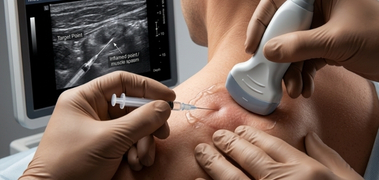
Image-Guided Anti-Inflammatory Injection
For muscle pain where significant inflammation is present alongside the trigger points, a targeted injection is delivered to reduce the inflammation and create a better environment for the muscle to recover.

PRP / Growth Factor Therapy
For chronic myofascial pain where the muscle tissue has been under prolonged stress, healing proteins from your own blood are injected into the affected area to support natural repair and reduce ongoing muscle sensitization.
What to Expect From First Visit to Follow-Up
Consultation
Dr. Smita takes a thorough history of your pain, where it is, where it travels, and what makes it worse and maps the trigger points involved before recommending any treatment.
Assessment
The specific trigger points are identified before any procedure begins.
Before the Procedure
A consent form is signed and Dr. Smita walks you through each step. No surprises.
The Procedure
Trigger point injections take 15 to 30 minutes. You're awake and comfortable throughout.
After the Procedure
30 to 60 minutes of rest at the clinic, then same-day discharge. Some mild muscle soreness for a day or two is normal.
Post-Care and Follow-Up
Clear aftercare instructions provided. Physiotherapy and postural guidance are often recommended alongside treatment. The team follows up with a call and reviews progress at scheduled visits.
What Does Treatment Cost?
Results from muscle pain treatment in Rohini, Delhi, for myofascial pain syndrome depend on how many trigger points are involved, how long the condition has been present, and whether lifestyle factors are being addressed alongside treatment. A few things that influence the cost:

The procedure: Trigger point injections, anti-inflammatory injections, and PRP therapy are each priced differently.
How many trigger points are involved: Widespread myofascial pain affecting multiple muscle groups requires a different approach than a single localized trigger point.
Number of sessions: Some patients notice significant improvement after one or two sessions. Others with more widespread or long-standing myofascial pain benefit from a short course of treatment.
At Trinity Pain Clinic, procedures are priced to be genuinely accessible compared to most pain clinics in Delhi. Dr. Smita believes that quality pain care shouldn't be out of reach, and affordability is a real part of how this clinic operates.
What Results Can You Realistically Expect?
Results from muscle pain treatment in Rohini, Delhi, for myofascial pain syndrome depend on how many trigger points are involved, how long the condition has been present, and whether lifestyle factors are being addressed alongside treatment.

Trigger point injections
Most patients notice immediate relief in the treated area. Referred pain typically settles as the trigger point releases.

Image-guided injections
Noticeable reduction in inflammation-driven muscle pain.

PRP therapy
Gradual, lasting improvement for chronic muscle pain and sensitization.
Most patients find that once the trigger points are properly treated, they can move more freely, sleep better, and function through their day without the muscle pain constantly in the background.

Dr. Smita Gulati
Interventional Pain Specialist, North DelhiAt Trinity Pain Clinic, Dr. Smita Gulati offers targeted muscle pain treatment in Rohini, Delhi that goes beyond the painful area and finds the trigger point actually generating the problem. If you've been living with muscle pain that nobody has been able to explain, this is where answers begin.
At Trinity Pain Clinic, every patient receives a thorough, unhurried consultation before any procedure is recommended. Dr. Smita reviews your history, goes through your reports carefully, and takes time to understand what relief would truly mean for your life.
Her approach to muscle pain treatment in Rohini, Delhi is built on one principle: precision over assumption. She uses only image-guided procedures so treatment reaches exactly where it needs to go.
She believes that affordable services are essential to the way this clinic functions. Quality treatment should be available for all, regardless of financial circumstances.
Frequently Asked Questions
When the Source Is Found, the Pain Finally Makes Sense.
Myofascial pain syndrome is one of the most commonly missed pain conditions — not because it's rare, but because it requires someone who knows exactly where to look.
At Trinity Pain Clinic, Dr. Smita Gulati offers targeted muscle pain treatment in Rohini, Delhi that goes beyond the painful area and finds the trigger point actually generating the problem. If you've been living with muscle pain that nobody has been able to explain, this is where answers begin.