It's not the heavy lifting that hurts. It's the light stuff. The cup. The handshake. The keyboard. A sharp, nagging ache on the outer side of your elbow that seems completely out of proportion to what you're actually doing.
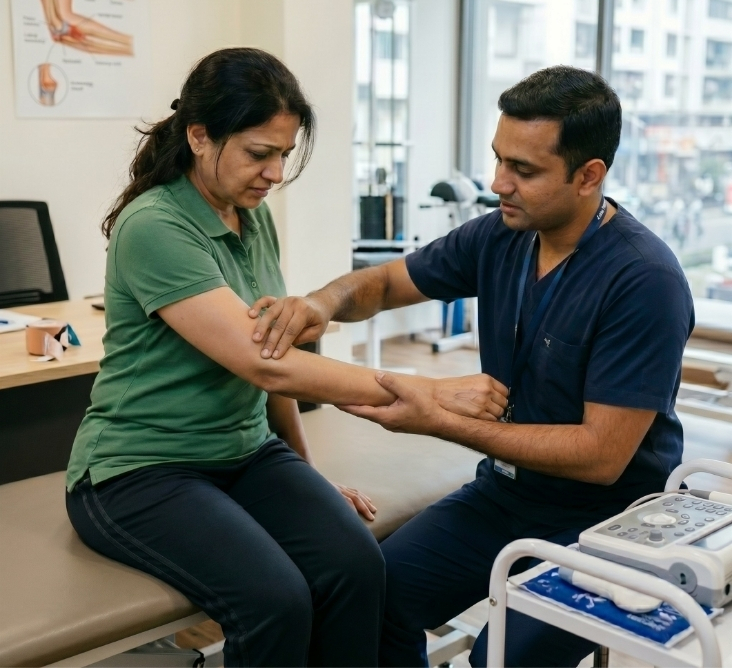
Tennis Elbow Treatment in Rohini
It's called tennis elbow, and despite the name, it has nothing to do with the sport. It affects anyone whose arm does repetitive work like desk workers, homemakers, gym-goers, drivers, and cooks.
You have rested it, worn an elbow support band, maybe even gone through physiotherapy. And still it comes back. At Trinity Pain Clinic, tennis elbow treatment in Rohini goes beyond temporary fixes and finds the source.
Schedule a VisitWhat's Actually Causing the Pain
Tennis Elbow (also called Lateral Epicondylitis), despite the name, has nothing to do with playing tennis. It's a tendon problem, not a joint problem. Tendons are the tissue that connect your muscles to your bones, and the ones around your elbow get repeatedly overworked until they start to break down. That's what causes the persistent ache on the outer side of your elbow.
It's most common in people who do a lot of repetitive arm movements, like typing, cooking, using tools, carrying bags, or gripping a steering wheel for long stretches. The pain often gets worse when you:

Lift or grip something, even something light
Even light objects can trigger sharp pain when the tendon is damaged and under stress.

Shake hands or open jars
Gripping and twisting motions place direct load on the affected tendon, causing immediate pain.

Type for extended periods
Repetitive finger and wrist movements during typing repeatedly stress the tendon over time.

Carry groceries or a bag on that side
Sustained load on the arm aggravates the tendon and often causes pain that lingers long after the activity.
Treating it like a joint problem is one of the main reasons it doesn't get better. The tendon itself needs to be targeted.
Why The Pain Hasn't Gotten Better
Most patients have already tried the standard options before finding us.
Rest
Helps short-term, but the tendon doesn't actually repair itself during rest. The moment you return to your routine, the pain comes back.
Painkillers
Reduce the ache temporarily, but do nothing for the damaged tendon underneath.
Physiotherapy
Is a valuable supporting therapy. It helps with flexibility and strength around the elbow, but works most effectively once the damaged tendon has been directly treated first.
Braces and supports
Offload the tendon slightly, but don't address the underlying damage.
Tendons have a limited blood supply and heal slowly on their own. Without treatment that actually stimulates repair, the cycle of pain and partial recovery just keeps repeating.
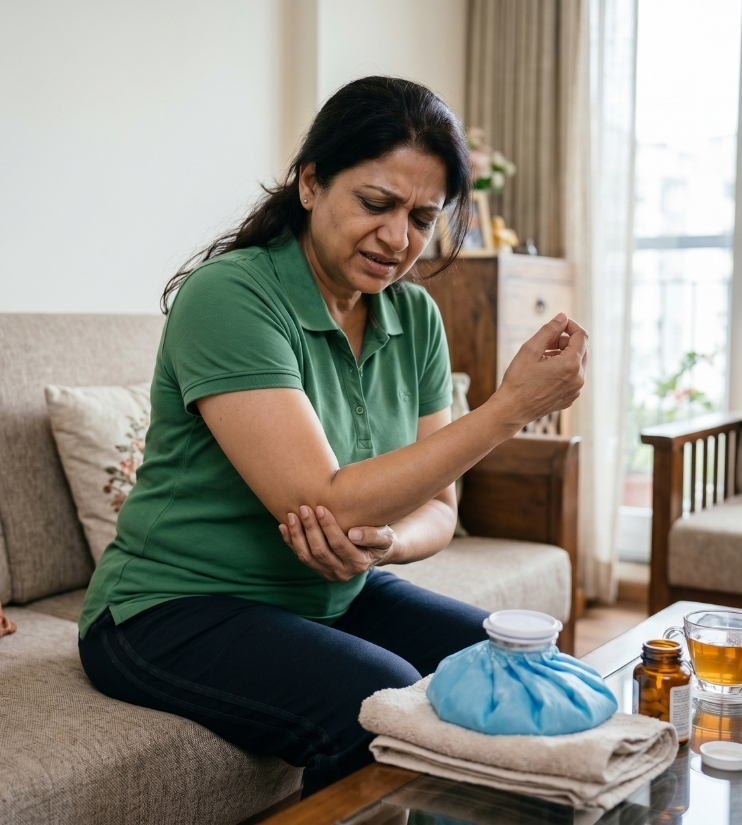
When Should You See an Interventional Pain Specialist?
It's worth consulting a pain specialist if:
Elbow pain has lasted more than six weeks despite rest and physiotherapy
The pain keeps returning every time you resume normal activity
Gripping, lifting, or typing has become something you actively avoid
The pain is starting to affect your work, daily routine, or sleep
A pain specialist approaches tennis elbow differently from a general physician or physiotherapist. The focus is on identifying exactly where the tendon is damaged and delivering treatment directly to that tissue, using image guidance to make sure it lands precisely where it needs to. This is the difference between treating the symptom and treating the source.
How Dr. Smita Gulati Treats Tennis Elbow
At Trinity Pain Clinic, Dr. Smita's approach to tennis elbow treatment in Rohini starts with an ultrasound assessment of the tendon. This confirms exactly where the damage is before any treatment begins. No assumptions, no guesswork. As a trusted elbow joint pain doctor in Rohini, Dr. Smita uses image-guided procedures so treatment is delivered precisely where it needs to go.
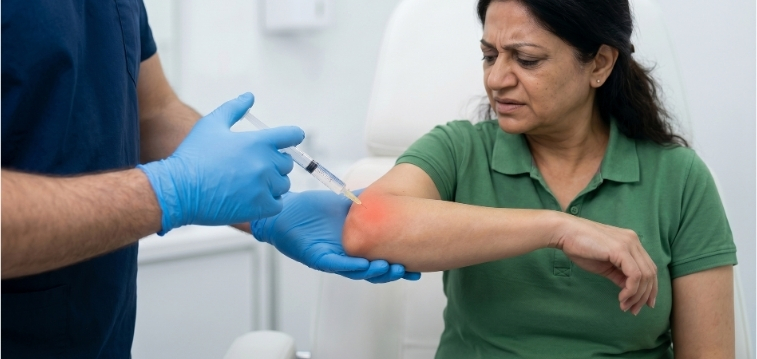
PRP / Growth Factor Therapy
The primary treatment for tennis elbow at Trinity Pain Clinic. Healing proteins from your own blood are injected directly into the damaged tendon tissue under ultrasound guidance, jumpstarting natural repair from within. Results build steadily and tend to be significant and long-lasting.
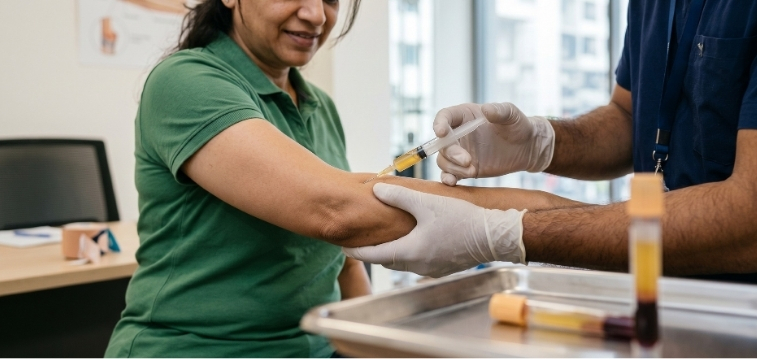
Image-Guided Anti-Inflammatory Injection
Used when pain is severe and needs to be controlled before other treatments begin. Reduces inflammation and gives the tendon a better environment to heal.
What to Expect From First Visit to Follow-Up
Consultation
Dr. Smita listens carefully, reviews your history, and explains clearly what's happening and what she recommends.
Imaging and Assessment
An ultrasound is done at the clinic to assess the tendon and confirm where the damage is.
Before the Procedure
A consent form is signed and Dr. Smita walks you through each step. No surprises.
The Procedure
Most elbow procedures take 15 to 30 minutes. You're awake and comfortable. Most patients find it far more manageable than they expected.
After the Procedure
30 minutes of rest at the clinic, then same-day discharge. Some tenderness for a day or two is normal.
Post-Care and Follow-Up
Clear aftercare instructions provided. The team follows up with a call and reviews progress at scheduled visits. Physiotherapy is often recommended alongside treatment and works best once the tendon has been properly addressed.
What Does Treatment Cost?
The cost of tennis elbow treatment depends on how long the condition has been present and how much the tendon has been affected. A few things that influence it:
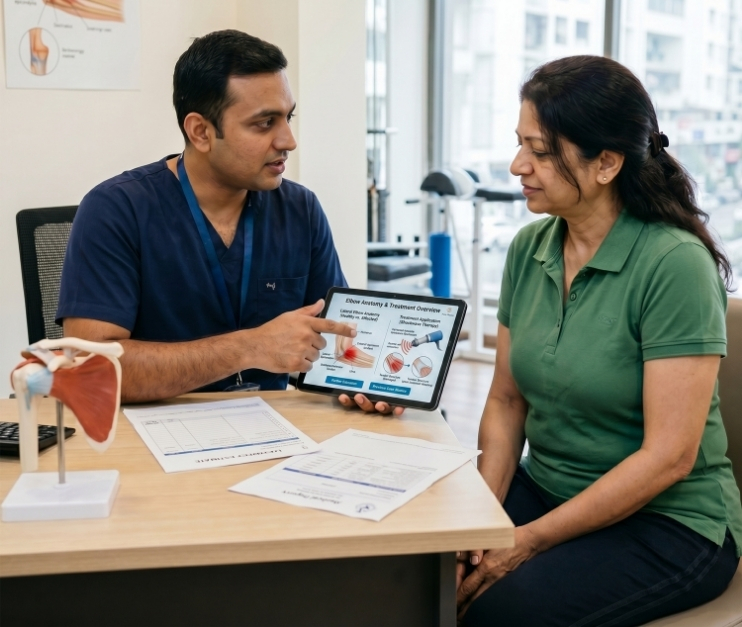
The procedure: PRP therapy and anti-inflammatory injections are priced differently, and some patients benefit from both at different stages of recovery.
How long it's been there: A recent tennis elbow and one that's been building for over a year require different levels of treatment.
Number of sessions: Many patients see strong results from a single PRP session. In more persistent cases, a follow-up session may be recommended.
At Trinity Pain Clinic, procedures are priced to be genuinely accessible compared to most pain clinics in Delhi. Dr. Smita believes that quality pain care shouldn't be out of reach, and affordability is a real part of how this clinic operates.
What Results Can You Realistically Expect?
Results from tennis elbow treatment in Rohini at Trinity Pain Clinic depend on how long the condition has been present. We believe in being upfront about this.

PRP therapy
Steady, lasting improvement as the tendon heals from within. Results build gradually and tend to be durable.

Image-guided anti-inflammatory injection
Noticeable pain relief, particularly useful for acute flare-ups.
For most patients, the goal is getting back to normal daily activities like typing, lifting, and gripping without thinking about their elbow. Not having to plan around the pain. Not wincing at a handshake. The majority of patients at Trinity Pain Clinic reach that point, and most are surprised by how much better things feel once the tendon is actually given a chance to heal.
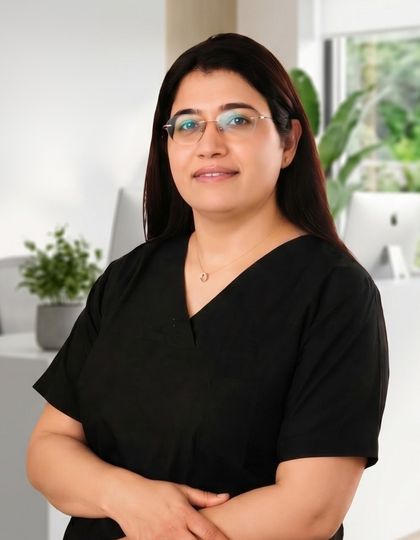
Dr. Smita Gulati
Interventional Pain Specialist, North DelhiAt Trinity Pain Clinic, Dr. Smita Gulati offers precise, image-guided tennis elbow treatment in Rohini that targets the damaged tendon directly and gives it what it needs to heal. As a dedicated elbow joint pain doctor in Rohini, she brings the same care and precision to every patient, no matter how long they've been dealing with the pain.
At Trinity Pain Clinic, every patient receives a thorough, unhurried consultation before any procedure is recommended. Dr. Smita reviews your history, goes through your reports carefully, and takes time to understand what relief would truly mean for your life.
Her approach to tennis elbow treatment in Rohini is built on one principle: precision over assumption. She uses only image-guided procedures so treatment reaches exactly where it needs to go.
She believes that affordable services are essential to the way this clinic functions. Quality treatment should be available for all, regardless of financial circumstances.
Frequently Asked Questions
Your Elbow Has Been Patient Long Enough. It's Time to Actually Treat It.
Tennis elbow gets written off as something to simply manage. But with the right treatment, it doesn't have to be a long-term problem. The tendon can heal; it just needs the right kind of help to do it.
At Trinity Pain Clinic, Dr. Smita Gulati offers precise, image-guided tennis elbow treatment in Rohini that targets the damaged tendon directly and gives it what it needs to heal. As a dedicated elbow joint pain doctor in Rohini, she brings the same care and precision to every patient, no matter how long they've been dealing with the pain.
If your elbow has been slowing you down long enough, this is a good place to start.