You know the diagnosis. You've seen the X-ray. And you've probably been told that the cartilage is worn, the joint is damaged, and at some point a knee replacement is coming. So now every ache feels like a countdown.
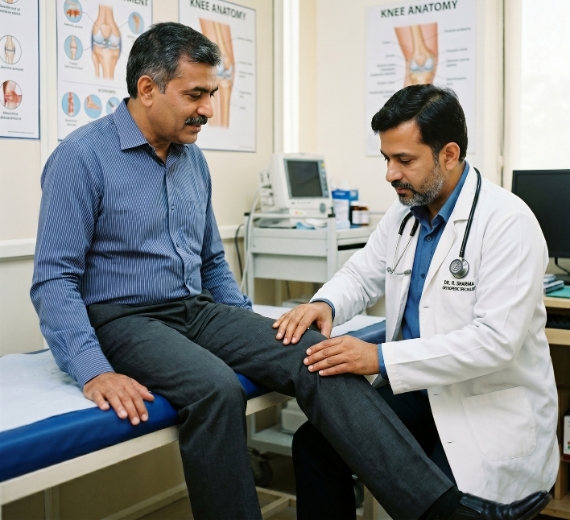
Osteoarthritis Knee Treatment in Rohini
Most people with knee osteoarthritis are given the same road map: medication, physiotherapy, and eventually a replacement. What rarely gets mentioned is the space in between. Trinity Pain Clinic specializes in exactly that space, bringing advanced osteoarthritis knee treatment in Rohini that goes beyond the standard options.
For most patients with Grade 1 to 3 osteoarthritis, surgery is not the only option and often not the right first step.
Schedule a VisitWhat's Actually Causing the Pain
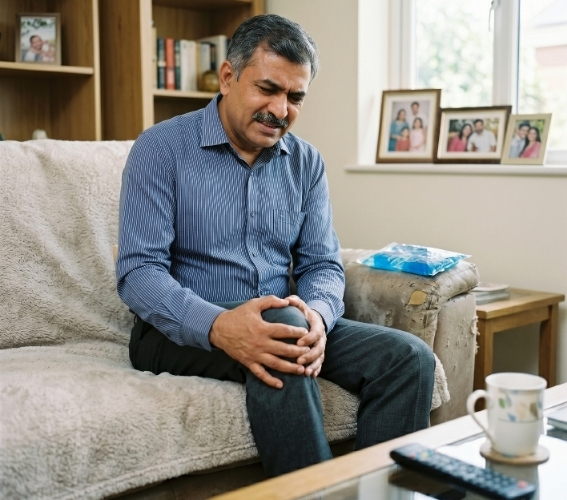
Osteoarthritis is a wear-and-tear condition of the knee joint. The cartilage that cushions the bones gradually breaks down, the bones come closer together, the joint gets inflamed, and the nerves grow sensitive, sending pain signals even during simple movements. As pain increases, many people reduce their activity level, which weakens the muscles around the knees. This loss of muscle strength further destabilizes the joint and compounds the pain. Additionally, cartilage relies on movement for nutrition, so decreased activity slows its nourishment, accelerating degeneration and worsening knee discomfort.
But here's what most patients aren't told: osteoarthritis progresses in stages, and the stage you're at determines what treatment is actually appropriate.

Grade 1
Minor cartilage wear, minimal pain. Most patients don't know they have it yet.

Grade 2
Noticeable thinning, pain after activity, some morning stiffness.

Grade 3
Significant cartilage loss, regular pain during movement, swelling after activity.

Grade 4
Severe wear, bones rubbing together, constant pain and limited mobility.
Grades 1 to 3 respond well to non-surgical, targeted treatment. Grade 4 may require a surgical conversation, but even then, pain management can significantly improve daily life.
Why The Knee Pain Hasn't Gotten Better
Most patients arriving at Trinity Pain Clinic have already tried the standard options. And still the pain persists.
Painkillers
Numb the pain signal temporarily but don't address the cartilage damage or joint deterioration actually causing it.
Physiotherapy
Is a valuable supporting therapy that helps strengthen the muscles around the knee, but it works most effectively once the primary source of pain has been directly addressed.
Rest
Reduces stress short-term, but doesn't slow the condition's progression.
Supplements
Supplements like glucosamine may offer mild support but rarely deliver meaningful relief in moderate to advanced cases.
Without targeting the specific source of the pain, the cycle of partial relief and returning pain simply continues.
When Should You See an Interventional Pain Specialist?
It's worth consulting an interventional pain specialist if:
Knee pain has persisted for more than three months despite medication and physiotherapy
You've been told knee replacement may be needed, but want non-surgical options first
You have Grade 1 to 3 osteoarthritis and want to delay or avoid surgery
The pain is affecting your sleep, mobility, or daily independence
Health conditions like diabetes or high blood pressure make surgery a higher risk
A pain specialist focuses on identifying the exact source of pain and treating it directly with image-guided procedures, without surgery. As one of the few dedicated knee pain specialists in Rohini focusing exclusively on interventional pain, Dr. Smita has helped many patients with osteoarthritis avoid or significantly delay surgery.
How Dr. Smita Gulati Treats Knee Osteoarthritis
At Trinity Pain Clinic, every osteoarthritis patient receives a thorough assessment before any procedure is recommended. Dr. Smita reviews your reports, assesses your grade, and designs a treatment plan tailored to your knee's current condition. Her approach to osteoarthritis knee treatment in Rohini is built on one principle: match the right treatment to the right grade, delivered precisely under image guidance.
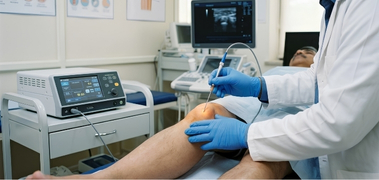
Radiofrequency Ablation (RF Ablation)
The headline treatment for knee osteoarthritis at Trinity. This procedure finds the specific nerves sending pain signals from your knee and gently turns them off. No surgery, no stitches, no hospital stay. Typically recommended for Grade 3 osteoarthritis and above.
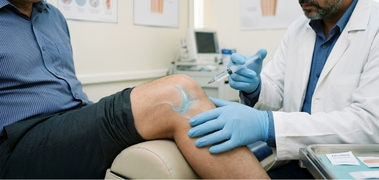
Viscosupplementation
This treatment restores the natural cushioning your knee has lost by injecting a fluid directly into the joint. It eases stiffness, reduces grinding discomfort, and helps the knee move more smoothly. Typically recommended for Grade 1 and Grade 2 osteoarthritis.
PRP / Growth Factor Therapy
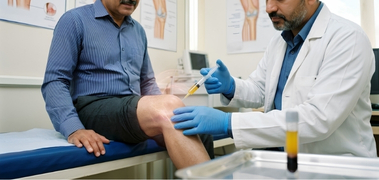
Healing proteins from your own blood are injected into the knee to repair damaged tissue from within. It reduces inflammation and gradually improves how the joint feels and functions. Results build over time and tend to last well. Best suited for earlier grade osteoarthritis.
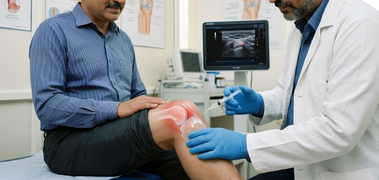
Image-Guided Anti-Inflammatory Injection
A targeted injection delivered directly into the knee joint under live imaging. It calms inflammation quickly and prepares the joint for further treatment or rehabilitation.
What to Expect From First Visit to Follow-Up
Consultation
Dr. Smita reviews your reports, assesses your grade, and explains her recommendation clearly. You leave with a specific plan.
Imaging and Assessment
Ultrasound or C-arm imaging is done at the clinic before any procedure begins.
Before the Procedure
A consent form is signed and Dr. Smita walks you through what will happen. No surprises.
The Procedure
Most knee procedures take 20 to 45 minutes. You're awake and comfortable throughout.
After the Procedure
30 to 60 minutes of rest at the clinic, then same-day discharge. Mild soreness for a day or two is normal.
Post-Care and Follow-Up
Clear aftercare instructions provided. The team follows up with a call and reviews progress at scheduled visits. Physiotherapy may be recommended as a supporting measure after treatment. Dr. Smita will advise you on the right next steps for your recovery.
What Does Treatment Cost?
The cost of osteoarthritis knee treatment varies depending on the grade of arthritis and which treatment is most appropriate. A few things that influence it:
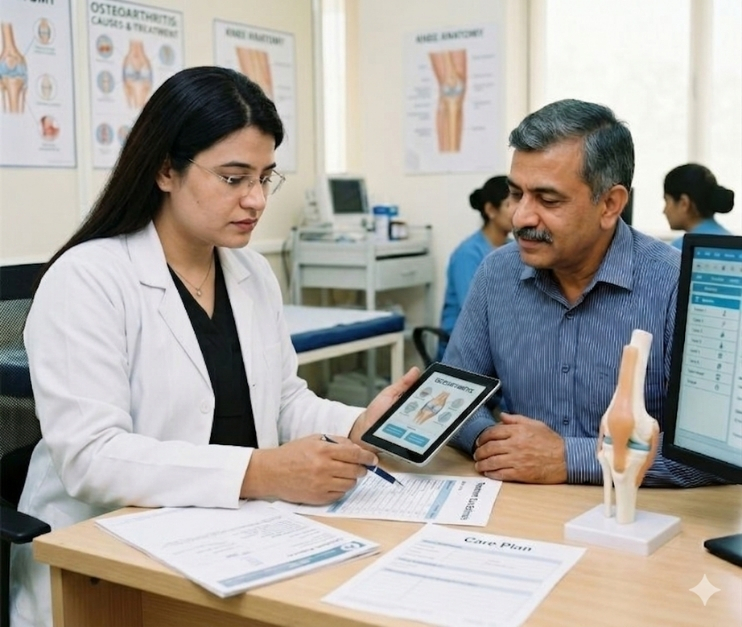
The procedure: Different treatments are priced differently, and the right one depends on how advanced the condition is.
How advanced the arthritis is: Earlier and more progressed grades call for different approaches, which affects the cost.
Number of sessions: Some procedures work well in a single sitting. Others may involve a short course for the best outcome.
At Trinity Pain Clinic, procedures are priced to be genuinely accessible. Quality pain care should be within reach for everyone who needs it.
What Results Can You Realistically Expect?
The results of osteoarthritis knee treatment in Rohini at Trinity Pain Clinic depend on the grade of arthritis and how long it has been present. We believe in being honest about that.

RF Ablation
Significant relief for Grade 3 and above, with results that tend to last well and the option to repeat.

Viscosupplementation
Improved mobility and reduced discomfort, particularly effective for Grades 1 and 2.

PRP therapy
Gradual, lasting improvement for earlier grade arthritis.

Image-guided injections
Noticeable relief for acute flare-ups.
For Grade 4 osteoarthritis, the goal shifts toward meaningful pain reduction and improved mobility. Most patients find they can move more freely and manage daily activities with significantly less difficulty.

Dr. Smita Gulati
Interventional Pain Specialist, North DelhiDr. Smita Gulati offers osteoarthritis knee treatment in Rohini built around your grade, your life, and what relief actually means for you. As one of the few dedicated knee pain specialists in Rohini focusing exclusively on interventional pain, she brings the precision and genuine expertise every osteoarthritis patient deserves.
At Trinity Pain Clinic, every patient receives a thorough, unhurried consultation before any procedure is recommended. Dr. Smita reviews your history, goes through your reports carefully, and takes time to understand what relief would truly mean for your life.
Her approach to osteoarthritis knee treatment in Rohini is built on one principle: precision over assumption. She uses only image-guided procedures so treatment reaches exactly where it needs to go.
She believes that affordable services are essential to the way this clinic functions. Quality treatment should be available for all, regardless of financial circumstances.
Frequently Asked Questions
Surgery Is Not the Punctuation at the End of This Sentence.
Knee osteoarthritis is a progressive condition, but progression does not mean surgery is inevitable. For most patients in the early to moderate grades, there is a real, effective, non-surgical path forward.
At Trinity Pain Clinic, Dr. Smita Gulati offers osteoarthritis knee treatment in Rohini built around your grade, your life, and what relief actually means for you. As one of the few dedicated knee pain specialists in Rohini focusing exclusively on interventional pain, she brings the precision and genuine expertise every osteoarthritis patient deserves.
If you've been told surgery is your only option, come in for a second opinion before you decide.